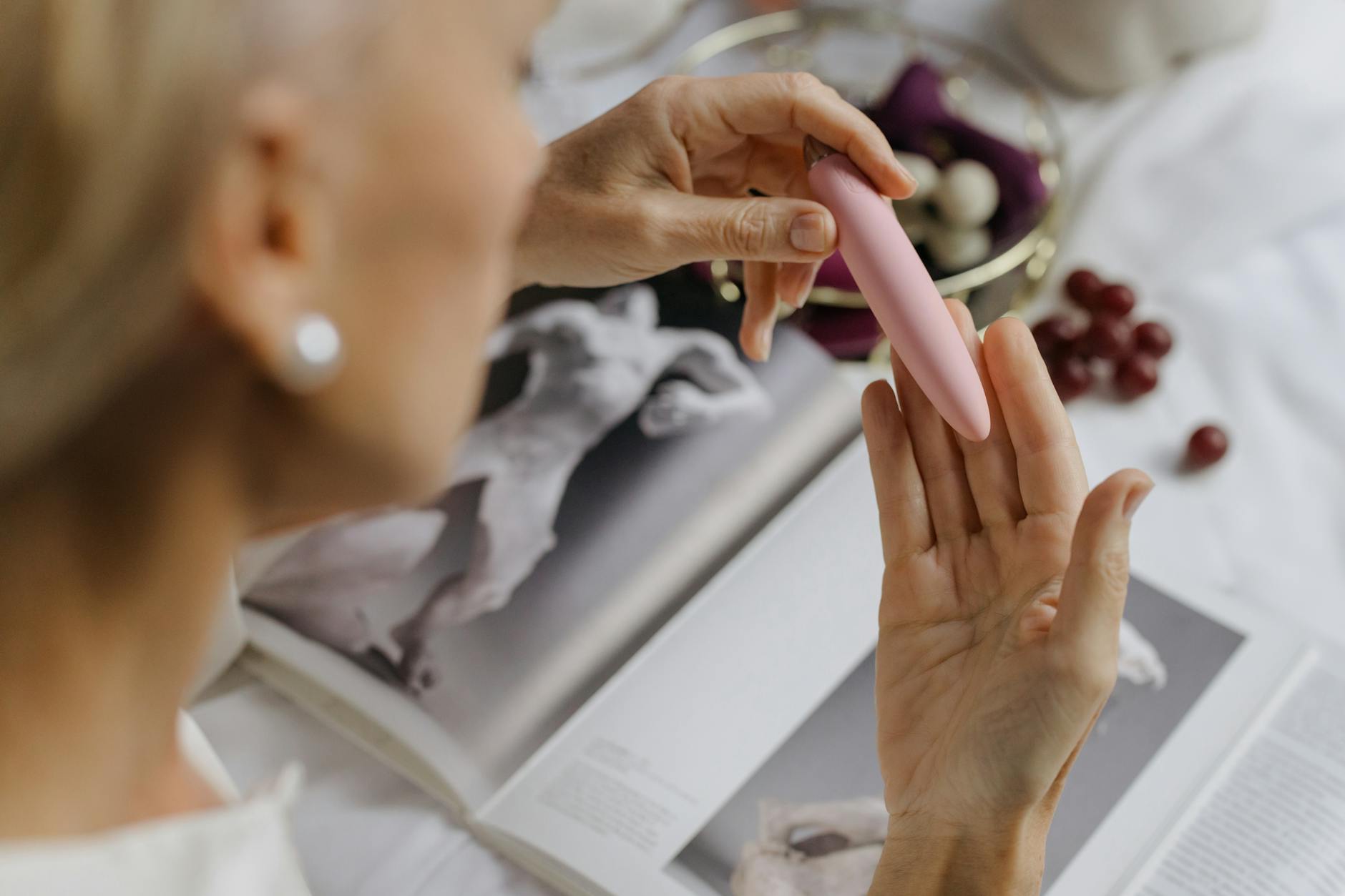
How to Use a Lemon Vibrator When Pleasure Feels Disconnected From Your Partner
Let's be real: sometimes your body knows exactly what it wants alone, and then your partner shows up and that knowledge just vanishes. You're not broken. This happens to most people at some point, and it's usually not about your partner or your desire for them. It's about two different nervous systems, two different speeds, and the gap between what your body knows it can do and what it allows itself to do with someone watching.
A lemon clitoral vibrator, when used intentionally with your partner, can bridge that gap. Not by replacing the intimacy, but by teaching both of you what your body actually needs to feel connected.
Why the disconnect happens in the first place
This isn't random. When you're alone with a lemon vibrator, there's zero performance pressure. You know exactly what you want, when you want it, and your nervous system trusts that nothing will interrupt or judge the process. Your body relaxes into it.
With a partner present, even one you love, your brain splits attention. Part of you is tracking their response, their breathing, whether they're enjoying this, whether you're "taking too long." That cognitive load pulls blood away from pleasure and toward anxiety. Your clitoris doesn't stand a chance against that kind of noise.
It's not betrayal of your partner. It's literally how the nervous system works. Dr. Emily Nagoski calls this the "dual control model." You have an accelerator (things that turn you on) and brakes (things that pump the brakes). During partnered sex, the brakes often get heavier because there's more at stake emotionally.
The conversation you need before you introduce a lemon vibrator
Honestly though, this is the most critical step and the one most people skip. If you bring a lemon sexual toy into bed without talking about it first, your partner might hear "I need this because you're not enough," even if that's not what you mean at all.
What you're actually saying is: "I want to feel as connected to my body during sex with you as I do when I'm alone, and I think this tool might help both of us get there."
Frame it this way. Talk before the moment arrives. Tell them:
- You've noticed the difference between your solo experience and partnered experience, and you don't want that gap anymore
- You're not replacing them; you're adding information about yourself that you want to share
- Using a lemon vibrator together might help you relax into pleasure instead of performing it
- You're inviting them to participate, not exclude them
If your partner resists, that's information too. Sit with that separately. But most of the time, once the defensiveness clears, partners feel relief. They don't have to be solely responsible for your orgasm anymore. That's a load off.
How to integrate a lemon clitoral vibrator into partnered intimacy
Start by using it solo while they're in the room, but not involved yet. This sounds awkward. It's not. You're showing them what brings you pleasure. You're also giving your nervous system a chance to learn that you can feel safe and aroused even with them present.
Once that feels natural, have them participate. Some options:
They hold the lemon vibrator while you guide the pressure and rhythm. This keeps the focus on your sensation but adds their touch and presence. You're literally teaching them your body's language in real time. This often creates more intimacy than partnered sex without a tool because there's no guessing.
You use it while they penetrate or stimulate you in other ways. The lemon's suction action on your clitoris plus whatever they're doing internally creates a compound sensation. Many people find this is where the disconnect closes fastest because your body gets stimulation and their presence simultaneously.
They use it on you while you focus on them. This can feel more passive, which some people love and others find distance-inducing. Experiment. There's no rule.
The rhythm reset that changes everything
Here's something most people don't expect: when you're using a lemon vibrator during partnered sex, you'll probably need to slow down. Your solo rhythm is yours. Partnered rhythm is different because there's communication happening, there's their arousal too, there's the possibility of simultaneous pleasure.
Start at pattern 1 or 2 on the lemon if you're used to higher intensity solo. This isn't about less sensation. It's about creating space for them to stay present without overwhelming you. You can always increase. It's harder to dial back panic once you've revved too high.
What happens to vulnerability when you introduce a tool
This is the piece nobody talks about. Using a lemon vibrator with a partner actually increases vulnerability because now they know what makes you feel good. That's terrifying sometimes. It means they could withhold it. It means they have the code to your pleasure, and trust matters more.
That's also where the deepest intimacy lives. When someone knows your nervous system and respects it, when they show up and help you access pleasure instead of just seeking their own, something shifts. The disconnect closes because you're finally on the same team instead of performing for each other.
Common friction points and how to navigate them
"It feels clinical now." Your partner says this, or you do. Here's the truth: introducing a tool doesn't make sex less intimate if you're doing it consciously. It makes it more intentional. Clinical is the absence of presence. You can use a lemon vibrator with full presence or no presence. The tool isn't the variable. You are.
"I'm worried they'll prefer the vibrator to me." This one goes both ways. Your partner might fear this. You might too. The reality: the vibrator does one thing well. It provides consistent clitoral stimulation. It doesn't hold you, kiss you, or know you. It's an instrument, not a replacement. Saying that clearly, over and over, helps both of you believe it.
"We never used toys before. Starting now feels like admitting something was wrong." Nothing was wrong. Your preferences evolved. Your body changed. You learned more about yourself. That's growth, not failure. Plenty of long-term couples introduce tools at year five, year fifteen, year twenty. There's no statute of limitations on pleasure.
The after-moment conversation
What you do in the ten minutes after sex matters as much as the sex itself. If you're using a lemon vibrator to close a disconnect, check in. Not clinically. Just softly.
"That felt different, didn't it?" "I felt more present." "I loved watching you actually be there with me."
Small statements. They anchor the experience. They tell your nervous system: this was safe, this was good, we did this together. That's how you rewire the disconnect. Not in one session. Over time, with consistency and honesty.
When it's time to see a therapist instead
If the disconnect feels so deep that even with a lemon vibrator and clear communication it doesn't improve, that's when to bring in a sex therapist or relationship counselor. Some disconnects point to larger relational patterns, resentment, or sexual trauma. A vibrator won't fix those. Professional support will.
This isn't failure. It's wisdom. You're recognizing that some gaps need more than a tool. They need someone trained to hold both of you while you sort through what's underneath.
FAQ
Can using a lemon vibrator with my partner actually fix the disconnect, or does it just mask the problem?
It depends on what's causing the disconnect. If it's performance anxiety or a gap between your solo pleasure knowledge and partnered knowledge, a lemon clitoral vibrator can genuinely help close that by retraining your nervous system to feel safe and aroused together. If the disconnect is rooted in relationship conflict, infidelity recovery, or deeper intimacy erosion, the vibrator helps you have a conversation, but it doesn't replace couples therapy. Use the tool as an opening, not a solution.
My partner is enthusiastic but I'm nervous about feeling vulnerable using a vibrator during partnered sex. How do I work through that?
Start with it completely solo until you're 100% comfortable. Then introduce your partner's presence gradually. They can be in the room but not touching you. Then they can touch you elsewhere. Then they can hold it. You're building trust in layers, not jumping to full participation. Vulnerability develops over time when nothing bad happens, over and over.
If I use a lemon vibrator during partnered sex, will I become dependent on it for pleasure?
No. Vibrators don't create dependency; they create information. Your nervous system learns "this sensation is available, and I can ask for it." You can still have pleasure without it. You now just have more options. It's like learning that you enjoy music during sex. Discovering that doesn't mean you're broken without it.
My partner wants to use a lemon vibrator but I don't feel ready. How do I say no without hurting them?
Simply: "I'm not ready yet, and that's about me, not about you. I want to get there, and I'd like to take this at my pace." Then follow through. If you say you want to get there, actually move toward it in small steps. If you say no and mean it forever, say that instead. Clarity is kindness.
Can using a lemon sexual toy together help me feel more connected to my partner's pleasure too?
Absolutely. When you're using a lemon vibrator and actually present, you're also noticing your partner's response to you. You can see what arouses them about seeing you aroused. That feedback loop creates real connection. You're not just receiving; you're witnessing each other.
What if my partner has a longer refractory period than me? Can a lemon vibrator help with that mismatch?
Yes. When they need recovery time, you can use a lemon vibrator solo or together in ways that don't require their arousal. You're not stuck waiting. You have your own source of pleasure. This also removes pressure from them to "perform" recovery quickly. If you need support navigating this specifically, the guide on how to use a lemon vibrator when your partner has a longer refractory period digs deeper.
The disconnect closes when you stop trying to perform it away
Your body doesn't lie. The gap between solo pleasure and partnered pleasure exists because your nervous system is protecting something. Maybe it's past hurt. Maybe it's performance anxiety. Maybe it's just that you've never learned to trust your own pleasure with someone else present.
A lemon vibrator doesn't erase that protection. But when you use it intentionally, with conversation and presence, it teaches your nervous system a new story: "I can feel deeply, be aroused, and be completely myself with this person here." That's not about the tool. That's about you deciding that the disconnect no longer serves you.
And sometimes, having the right instrument in your hand while you make that decision is exactly what you need.
If you're feeling stuck in the broader dynamics of your partnership, consider reaching out. We're here to help you think through what healthy intimacy looks like for you both.