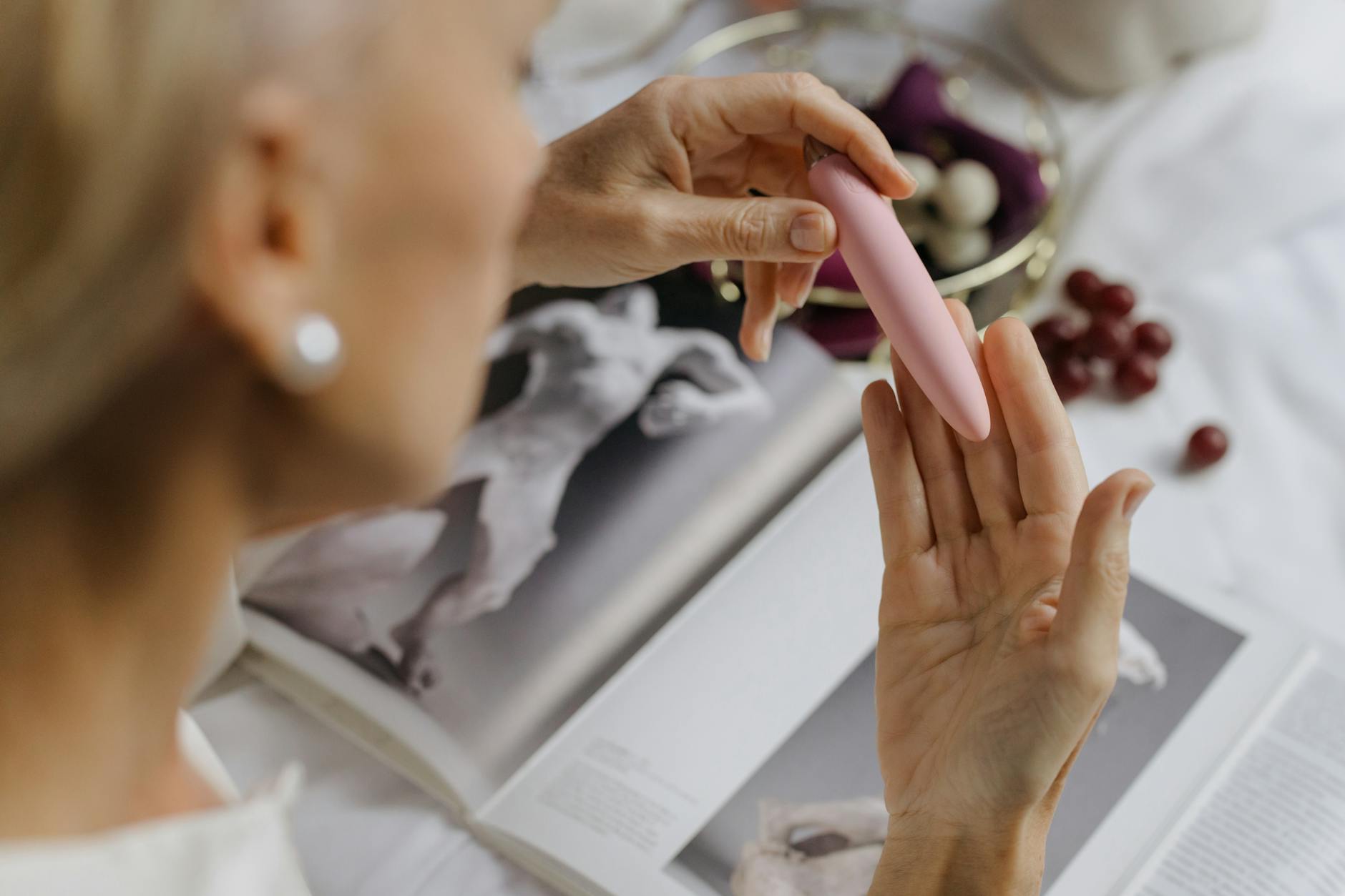
How to Use a Lemon Vibrator When Your Partner Has a Longer Refractory Period
When your partner needs time to recover between orgasms but you're ready for more, a lemon clitoral vibrator becomes your best tool for sustained pleasure without waiting or resentment.
Your partner has one. You might have one too. And they're almost certainly not the same length. This isn't a problem. It's just biology, and it's way more common than anyone talks about. People with penises typically need 30 minutes to several hours between orgasms (sometimes longer as they age). People with vulvas can often orgasm multiple times in succession or have little to no recovery time at all. The mismatch is real, and it creates a gap in the bed that neither of you caused but both of you have to navigate.
A lemon clitoral vibrator solves this in a way that nothing else quite does. It lets you continue your own pleasure on your own timeline without making your partner feel inadequate or pressured.
Three things usually happen when refractory periods don't align. First, the person who's ready for more pleasure starts to feel abandoned or like something's wrong with them. Second, the person recovering starts to feel guilty and inadequate, like they're failing their partner. Third, you both get frustrated and either pretend the difference doesn't matter or you just stop having sex altogether.
None of that is necessary. The gap isn't a failure. It's an opportunity to use pleasure tools intentionally.
Unlike a traditional vibrator, a lemon sucker uses rhythmic air-pulse technology to stimulate the clitoris through gentle suction rather than direct vibration. This means you can sustain arousal and pleasure independently while your partner recovers, without needing penetration or their active participation. You get to stay in your body, in your pleasure, in the moment. Your partner gets to rest and watch, or rest and hold you, or rest and reconnect without pressure.
The lem vibrator (as it's often called) is also genuinely discreet and intuitive. You can use it while lying next to your partner. It doesn't require repositioning the entire bed. It fits into the physical and emotional space you're already sharing.
Let's be direct: you need to talk about this before you're in bed together. Not during, not right after sex, not when you're both frustrated. Find a neutral moment maybe over coffee or a walk, and say something like this:
"I've noticed that after you come, you need recovery time, and I often want to keep going. That's not a criticism of you. It's just how our bodies work differently. I want to find a way for both of us to feel satisfied without either of us feeling rushed or guilty. Can we talk about that?"
Then listen. Your partner might feel relieved that you're naming it. They might feel defensive. They might worry that this means you're not satisfied with them. Your job is to clarify that you're satisfied with them, and you want tools to extend the pleasure you're already having together.
If your partner is uncomfortable with you using a pleasure toy, that's worth exploring separately. But if it's just awkwardness or not knowing it was an option, this conversation often shifts things quickly.
The easiest way is during partnered sex itself. After your partner comes, instead of both of you stopping, they stay close. You use the lemon clitoral vibrator on yourself while they're still inside you (if that position works) or beside you. Some people find it incredibly hot to watch. Others just want to rest their eyes. Both are fine.
Start on a lower setting. The lem vibrator has multiple intensity levels, so you can ease into it while your partner is still connected to you emotionally and physically, even if they're not actively thrusting. This creates continuity in the moment rather than the jarring feeling of "oh, now we stop."
If that doesn't feel right, the second option is post-sex alone or semi-alone time. You come back from the bathroom, settle back into bed, and your partner knows you're going to use your clitoral vibrator for another 10 or 15 minutes. They can rest, scroll, talk to you, or be present without performing. There's zero pressure.
Here's where partnership coaches see most couples stumble. Your partner might feel replaced. They might worry that a pleasure tool means you don't actually want them. So you have to say it: this isn't about them. This is about you finishing what your body started. And you want to do it beside them because you like being close to them.
Some partners actually want to help. They might want to hold you, or kiss you, or talk you through it. Some want to just be asleep. Both are valid. The key is that you're not waiting for them to be "done recovering" before you're allowed to keep going. You're taking your own pleasure seriously.
If your partner seems distant or resentful about this, that might signal a bigger conversation needed. Sometimes refractory period mismatch becomes a symptom of other relationship friction. If that's the case, it's worth talking to someone like a relationship coach or therapist who specializes in couples work.
Your partner's refractory period isn't fixed. Stress, age, medication, sleep, and how intensely they just came all affect recovery time. Some nights it's 15 minutes. Some nights it's 90. Don't try to predict it. Instead, after they come, check in: "Do you need me to stop, or are you okay if I keep going?" Sometimes the answer will surprise you.
Also, multiple orgasms for you might mean different things on different nights. Sometimes you want two or three more. Sometimes you just want one long, sustained sensation. The beauty of a lemon clitoral vibrator is that you can stay in that pleasure state as long as feels good without needing your partner to keep performing or recover faster.
I've worked with couples who describe this shift as genuinely game-changing. Not because the vibrator itself is magic, but because it removes the pressure and the gap. It lets you both experience pleasure on your own timelines without resentment creeping in. You're not waiting for your partner to recover. Your partner isn't feeling guilty about needing time. You're just extending the good feelings.
The lem vibrator or any quality clitoral vibrator becomes a tool for independence and connection at the same time. That's rare.
Absolutely. In fact, many partners find this way of staying connected feels less passive than just resting. They get to be part of your pleasure without needing to recover their own body. Some people describe it as deeply intimate. Start slow and pay attention to what actually feels good rather than what you think should feel good.
No. Needing more time or different stimulation doesn't mean anything about your partner's adequacy. It's about your own body's capacity for pleasure, which is separate from your emotional connection. A lot of couples actually find that introducing toys deepens their sex life because they stop waiting for each other to "do it all" and start seeing pleasure as something they can give and receive in multiple forms.
This is worth a honest conversation outside the bedroom. Often insecurity comes from not understanding what the tool is actually for. Explain that it's not a replacement. It's an extension. If he's worried about performance or adequacy, that's a deeper conversation about what you both need emotionally from sex, and might benefit from a couples coach or therapist who can help untangle it.
It varies wildly. For people with penises, anywhere from 10 minutes to several hours depending on age, health, medications, and arousal level. Refractory periods generally get longer with age. For people with vulvas, recovery time is typically much shorter or nonexistent, which is why the mismatch happens so often. There's no "normal" beyond that.
Completely. Libido and orgasm capacity aren't the same. You can be just as satisfied with your partner while also wanting additional physical stimulation. The two things aren't in competition. Using a lemon vibrator for that additional stimulation actually protects your partnered sex because it removes the pressure for your partner to do something their body can't do as quickly.
Not unless it's creating actual conflict. But some couples do find that having a rough framework helps. Like "I'll usually use it for 10 to 15 minutes after we finish." This gives you both a sense of what to expect and prevents anyone from feeling like they're being ignored for hours. But this is a preference thing, not a rule thing. Talk about what feels right to you both.
Refractory period mismatch used to mean one person waited or faked satisfaction. Now you have options. A lemon vibrator isn't a workaround. It's a tool that lets both of you get what you actually want from sex. That's not a compromise. That's a win for everyone.
If you're ready to explore this possibility, start with the conversation. Everything else flows from honest communication about what you both need and deserve.