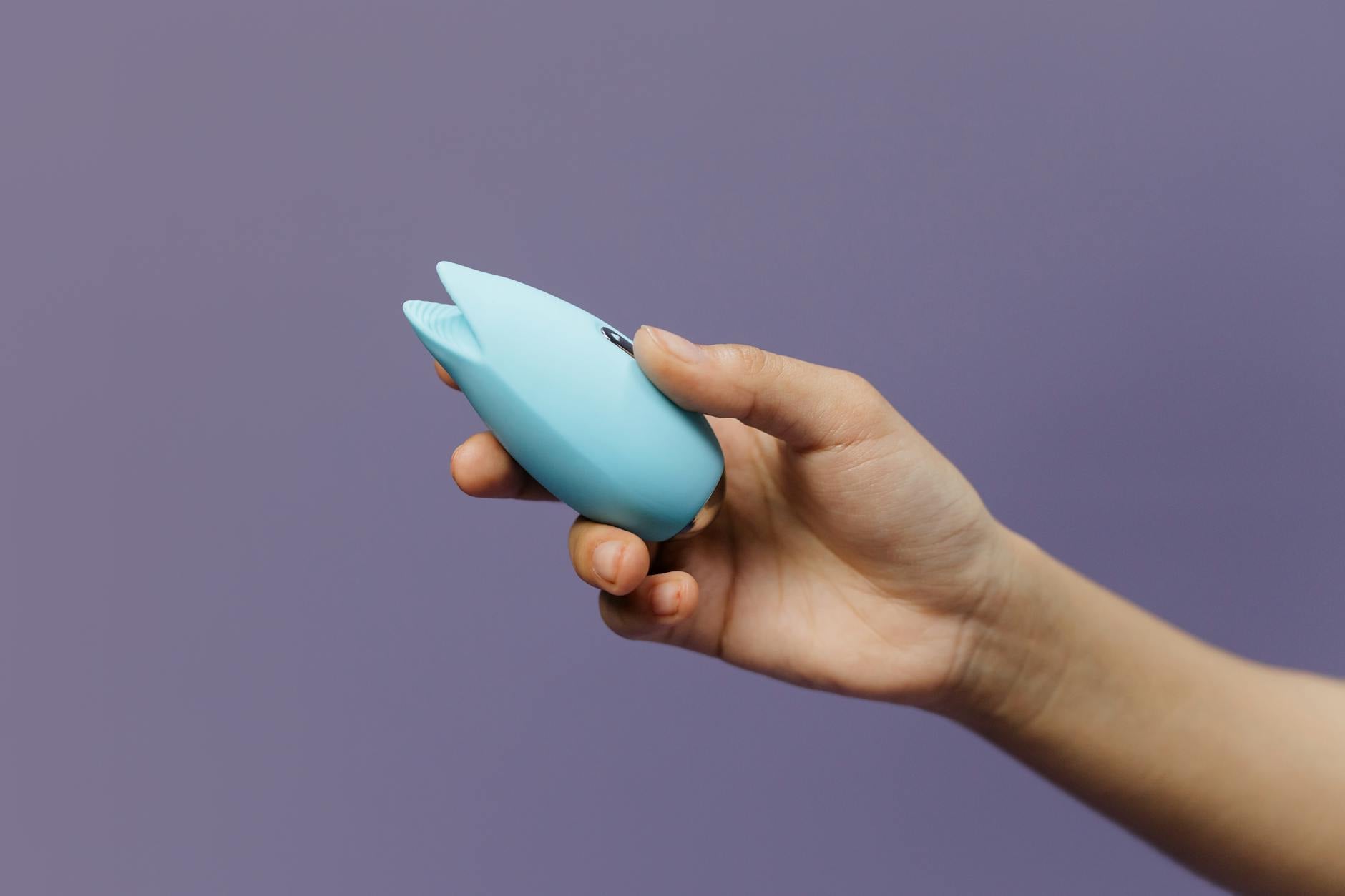
How to Use a Lemon Vibrator When Recovering From Sexual Trauma
Reclaiming pleasure after trauma isn't linear. Here's how to rebuild sensation safely, at your own pace, with tools that honor what your body has been through.
Sexual trauma rewires how your nervous system responds to touch. Your body may freeze during moments you intellectually know are safe. You might feel numb where you once felt sensation. Desire can vanish entirely, or arrive at unpredictable moments that feel disconnected from your actual intentions. None of this means you're broken or that pleasure is permanently off the table. It means your nervous system needs a specific kind of rebuilding.
Most guides tell you to "relax, use lube, and build up gradually." That's incomplete for trauma recovery. You're not just working with physical sensation. You're working with a nervous system that learned to protect you by shutting down, freezing, or flooding. Adding stimulation without addressing the nervous system piece often backfires. You end up feeling more disconnected or triggered, then blame yourself for not being "ready."
A lemon clitoral vibrator can absolutely be part of healing. But the framing matters wildly. You're not trying to achieve faster orgasms or match some imagined normal. You're gently teaching your body that sensation can be safe, chosen, and yours.
Before you pick up a lemon vibrator, three things need to be in place.
Grounding practice. Your trauma response likely involves dissociation. During dissociation, adding vibration can intensify the disconnection. Before any session, spend 2-3 minutes on a grounding technique. The 5-4-3-2-1 sensory check works: name five things you see, four you can touch, three you hear, two you smell, one you taste. This anchors your nervous system in the present.
A clear exit signal. When you're healing from trauma, the ability to stop immediately is non-negotiable. Not just "pause for a second." I mean stopping the entire session without explanation, without guilt, without your partner asking why. Agree on this boundary before you start. If you're alone, know exactly how to turn off your toy and set it aside.
A trauma-informed therapist in the picture. Ideally, before you start. If that's not possible right now, at least someone you can talk to about what comes up. Sometimes reintroducing sensation brings old memories or emotions to the surface. That's normal. It's also information, and you'll need support processing it.
The first few sessions with a lemon vibrator aren't about reaching pleasure or orgasm. They're about building tolerance to sensation in a safe container.
Here's what that looks like. Set aside 10-15 minutes when you're completely alone. Use the grounding technique. Then, turn on the lowest pattern on the lemon vibrator. Touch it to your inner wrist or the back of your hand first. Get used to the vibration, the sound, the sensation. Just that. No genitals, no pressure. Your job is to notice: do I feel okay right now? Am I present? Can I stop if I want to?
Repeat this for 3-5 sessions, same location, same low pattern. You're building a new sensory memory that says "vibration equals safety and control." This is not boring. This is foundational.
Once you can tolerate vibration on neutral skin for the full 10-15 minutes without triggering, you can move toward the vulva. Still alone. Still on the lowest pattern. Still not trying to achieve anything.
Start with external sensation only. The outer labia, the perineum, anywhere except the clitoral glans to begin. This registers as sensation without the intensity of direct clitoral contact. Many trauma survivors find that direct clitoral stimulation feels too exposed or overwhelming early on. There's no rush to get there.
Budget 5-10 sessions like this. Each one teaches your body: "I choose this. I can stop. I'm safe." Your nervous system learns through repetition, not through forcing progress.
When you do eventually try direct clitoral contact, keep the pattern low. Many people assume they'll need higher intensity. Often the opposite is true early on. Lower vibration means more control, more ability to notice what you actually feel versus what you think you should feel.
It's completely possible that at some point, even low-intensity stimulation will trigger a flashback or freeze response. Your body suddenly feels unsafe. Your mind goes somewhere else. Your muscles lock.
Stop immediately. This isn't failure. It's information. Your nervous system is still learning that this experience is different from the trauma.
After you've grounded and felt safe again, you have a choice. You can journal about what happened. You can sit with it without pushing yourself back into sensation. Or you can slowly start the grounding process again and try one more minute of the vibration, purely to prove to your nervous system that you're still in control.
There's no right answer. What matters is that you stayed present, you stopped when you needed to, and you didn't shame yourself. That's the core of healing.
Sometimes healing happens solo. Sometimes it happens with a trusted partner. Both are valid. If you're bringing a partner into this, their job is profoundly simple. They do nothing without explicit instruction. They don't initiate. They don't interpret silence as "keep going." They follow.
One approach: you hold and control the lemon vibrator. Your partner is present but completely hands-off. You control the pace, the intensity, where it touches. Your partner's only job is to check in verbally every couple of minutes: "Are you okay? Do you want to keep going?" Simple yes or no answers only.
This prevents you from falling into old patterns of overriding your own signals to please someone else. And it gives your partner a concrete role in your healing, which many partners deeply want.
Healing pleasure often looks different from pre-trauma pleasure. You might never have multiple orgasms in a row. You might orgasm easily but feel emotionally disconnected. You might experience something that's not quite an orgasm but feels incredibly satisfying. All of this is normal and doesn't need fixing.
Many people find that their most powerful orgasms happen months or years into recovery, when their nervous system finally feels safe enough to fully let go. That's not a promise. It's an observation from decades of working with survivors. Your path will be uniquely yours.
Clean your lemon vibrator before and after. This isn't just hygiene. It's a ritual that says "I'm taking care of myself." Use warm water and mild soap, or a toy cleaner made specifically for silicone.
Store it somewhere you control. Not hidden in shame. Not on display where it creates anxiety. Visible enough that you can access it without hunting, hidden enough that you feel agency over who sees it.
If you're sharing space with a partner or housemates, this matters. Your reclaimed pleasure shouldn't come with a side of vulnerability or exposure.
Wear clothes you find comforting beforehand and afterward. Not sexy clothes. Comfortable ones. This signals to your body that pleasure isn't about performance.
There will be weeks where nothing changes. You'll use the lemon vibrator and feel the same disconnection. This doesn't mean you're failing. Nervous system healing isn't linear. Sometimes progress is invisible for weeks, then suddenly clicks.
If you're genuinely stuck for longer than a month—no shifts in sensation, no reduction in freezing, no progress—talk to your therapist. It might mean you need a different approach. It might mean you need additional trauma processing work alongside the physical reintegration.
My Lem Shop's lemon clitoral vibrator is designed for exactly this kind of slow, intentional work. The suction-based stimulation is gentler than traditional vibration, which many people in early recovery find more tolerable. The patterns range from barely-there to intense, so you can stay in the gentle zone as long as you need to.
Yes, but only with a trauma-informed therapist involved and only when you've built a grounding and safety practice first. The vibrator itself isn't healing. The intentional, safe, chosen process around it is. Moving too fast or skipping the nervous system prep work can retraumatize instead of heal.
Numbness is a normal trauma response. Your nervous system shut down sensation as a protection. That protection can take months or years to lift. Feeling nothing doesn't mean the tool isn't working. It means you're in early stages. Keep your expectations low. Your only job is to be present and notice small shifts.
Completely normal. Emotion and sensation are often tangled in trauma. When you start reclaiming sensation, old grief, anger, or fear can come up. That's not a sign to stop. It's a sign your body is processing. Let yourself cry. Ground afterward. That's part of healing.
External stimulation with a lemon vibrator can be especially valuable for people triggered by penetration. You're reclaiming clitoral pleasure without any penetrative element. Many survivors find this the safest entry point back to sensation.
There's no timeline. Some people feel shifts in weeks. Others need months or years. Healing isn't about speed. It's about consistency, safety, and self-compassion. Your only measure is whether you feel slightly more agency over your body than you did last month.
This is where clear communication becomes everything. Sit down outside of any intimate moment and explain: "I'm rebuilding my relationship with my own body. This is about me reclaiming pleasure, not about evaluating us or our connection." If your partner can't respect that boundary and pace, that's meaningful information about the relationship itself. A partner who supports trauma recovery doesn't rush you.
Recovery from sexual trauma isn't about erasing what happened or "getting back to normal." Normal was before the trauma. You're building something new. A body that's yours again. A nervous system that knows how to receive sensation without threat. A version of pleasure that feels chosen, safe, and genuinely satisfying.
That work is slow and it's hard. It also matters more than almost anything else you'll do. A lemon vibrator is just one small tool. Your grounding practice, your therapist, your boundaries with partners, your willingness to stop when you need to, your refusal to rush yourself—those are the real work. The tool just supports what you're already doing.
You deserve pleasure that feels safe. Take the time it needs.