How to Use a Lemon Vibrator When Desire Mismatches With Your Partner
When one of you wants sex more than the other, a lemon clitoral vibrator stops being about pressure and starts being about pleasure. Here's the framework.
Desire mismatch in a relationship isn't actually about sex. It's about feeling wanted, or feeling pressured, depending on which side of the gap you're on. One partner's "I wish we had sex more" translates to the other partner as "you're not enough," and suddenly there's no solution that doesn't feel like someone's sacrificing.
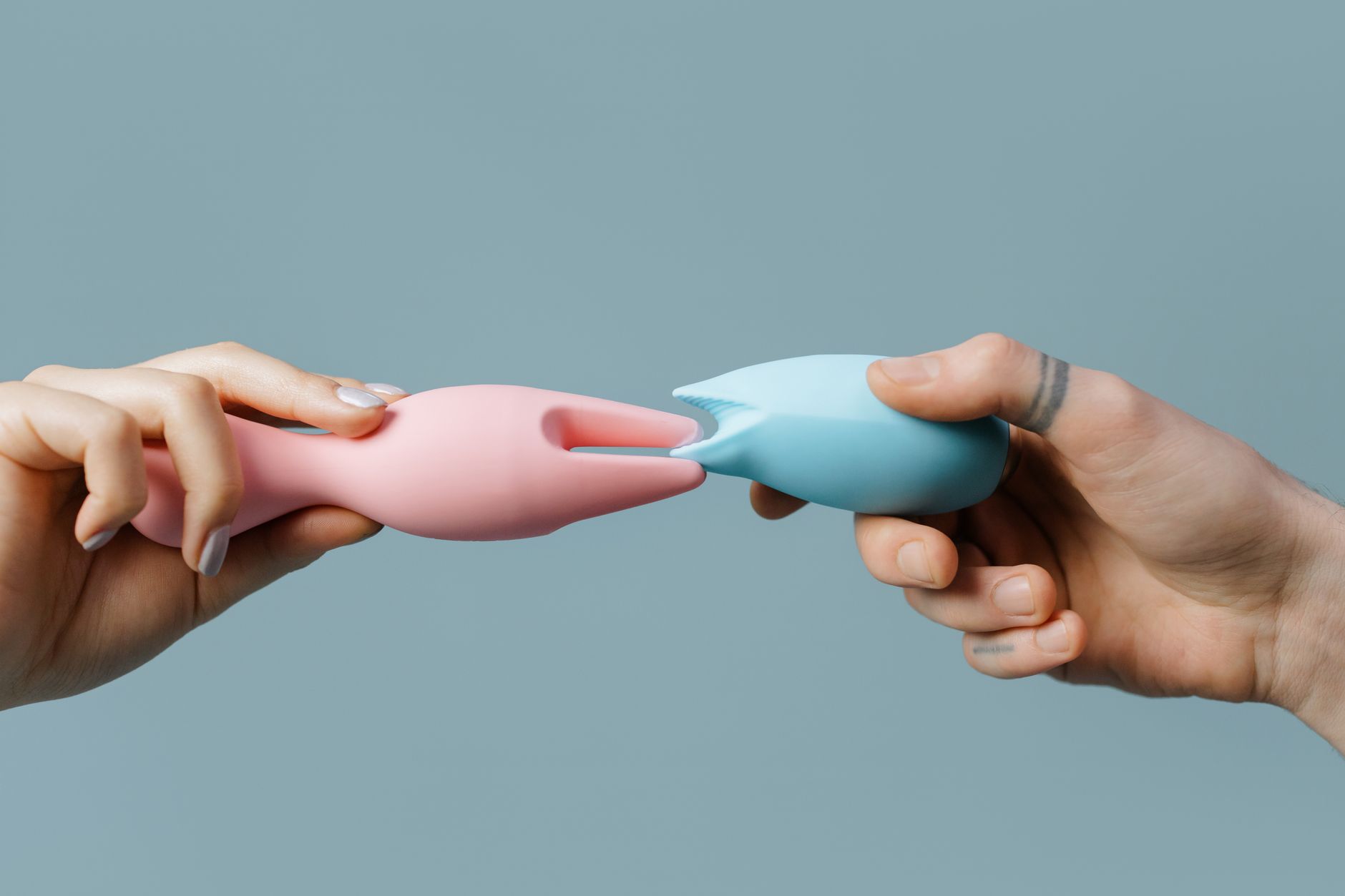
A lemon vibrator—specifically a clitoral vibrator like the Lem—changes the equation because it stops being about you and starts being about pleasure for its own sake. When the lower-desire partner can receive sensation and orgasm on their own timeline, without the pressure of "making" anything happen for someone else, the whole dynamic shifts.
Here's what I see clinically: desire mismatch isn't usually about how attractive you find your partner. It's about bandwidth, nervous system state, and mental load.
The partner with higher desire often has sexual expression as their go-to nervous system reset. They touch because they want to feel connected, present, and alive. The lower-desire partner might actually want connection—just in a different form. A conversation. A walk. Time without demands.
When the lower-desire partner feels constantly solicited for sex, their nervous system tightens. Initiations start to feel like pressure rather than invitation. And pressure kills desire faster than almost anything else.
There's a structural problem with typical advice for desire mismatch: it assumes sex requires both of you. "Have sex less" (compromises the higher-desire partner), or "be more spontaneous" (pressures the lower-desire partner further). Neither works.
A lemon clitoral vibrator lets the lower-desire partner access pleasure independently. That changes things:
They're not performing for anyone.
There's no timeline pressure.
Pleasure isn't contingent on someone else's arousal.
They're building capacity back to their own arousal, not just responding to demand.
The higher-desire partner, meanwhile, gets to witness their partner experiencing pleasure. They're not being rejected. They're being invited into something different.
This is the part most couples get wrong. If the lower-desire partner suggests a vibrator and the higher-desire partner hears "I want to be alone," you've already lost the conversation.
Start with the frame: "I want to reconnect with what feels good to me, independently. Not instead of you—alongside you."
That's different. One is exclusionary. One is exploratory.
If you're the higher-desire partner, here's the counter-frame: "I'd love to watch, or just be in the room. Your pleasure is something I want to be near." That's not pressure. That's presence.
The lower-desire partner using a lemon vibrator while their partner is present—reading, touching themselves, watching—is still couples pleasure. The energy is different, but the intimacy is real.
Let's say you're going to try this. How do you actually structure it so neither of you feels weird?
Start solo first. The lower-desire partner should spend a week exploring the lemon vibrator alone—no audience, no performance. Learn what intensity feels good. Learn how long it takes to get there. Build your own baseline for pleasure that has nothing to do with your partner's expectations.
Then choose a moment. Not "tonight we're doing this." Instead: "I want to show you something that felt good." That's an invitation, not an obligation.
Set a micro-boundary. You don't have to have sex after. You don't have to do anything. Pleasure can be the full event. The higher-desire partner should be clear about this too: "I'm here to enjoy this with you, that's all."
Let it be slow. The first time the lower-desire partner uses a lemon clitoral vibrator with their partner present might feel awkward. That's normal. The second time is easier. By week three, the energy shifts. You stop thinking about whether it's "weird" and start noticing what it actually feels like.
Here's the neurobiology: when the lower-desire partner experiences pleasure independently, a few things happen simultaneously.
First, their dopamine system fires without the cortisol spike of pressure. They're associating sexual sensation with safety, not demand. That's the foundation for desire to return.
Second, they're building differentiation. They're not "responding to their partner's desire." They're exploring their own. That distinction is huge. Many lower-desire partners have spent so long accommodating that they've lost touch with what they actually want. A lemon vibrator is a way back to that.
Third, the higher-desire partner sees their partner experiencing pleasure. That's bonding. You're not fighting for scraps of sexual attention. You're both tending to pleasure—just in different forms, in the same room.
Over time, this often leads to more sex, not less. But more importantly, it leads to sex that both people actually want.
Sometimes desire mismatch is a symptom of something else: depression, relationship resentment, medical issues like low testosterone or SSRI side effects, or fundamental incompatibility in how you experience sexuality.
A lemon vibrator can help with the mechanics and the pressure, but it can't fix a relationship where one person feels fundamentally unseen. If you're using toys to avoid the larger conversation—"I don't feel attracted to you anymore" or "I resent that you're always working"—the vibrator becomes a band-aid on a structural problem.
If that's where you are, a couples therapist isn't a failure. It's an investment. The framework for reconnecting often needs more than a new tool.
Instead of "We're not having enough sex," try this:
"I miss feeling wanted. I miss the lightness between us. I want to rebuild that. I don't know if that looks like sex in the traditional way, but I want to try something new together."
That's not a demand. It's a vulnerability. And it opens a conversation instead of closing it.
The lemon clitoral vibrator becomes part of that conversation—a tool for exploration, not a solution to a deeper problem. If you're both willing to try, it often works. If one of you isn't willing to try anything, that's information too.
That's a common fear. The reframe is this: a lemon vibrator isn't about them not being enough. It's about creating a scenario where desire and pressure are decoupled. Right now, sex is tied to "does my partner want me." A vibrator is just pleasure for its own sake. That distinction actually helps the higher-desire partner feel less rejected because it's not a judgment on them—it's a reset on the dynamic.
Yes, absolutely. Many couples find that using a lemon clitoral vibrator during penetrative sex changes the texture of the experience. The lower-desire partner often has an easier time reaching orgasm, which can make the whole experience feel less goal-oriented and more connective. That said, some couples find solo vibrator use works better as a rebuild phase. Do whatever feels less pressured.
This varies wildly. Some couples see a shift in weeks. Others take months. The key indicator isn't how often you're having sex—it's whether the lower-desire partner is initiating without feeling guilty, or the higher-desire partner is receiving without feeling rejected. When those feelings shift, the frequency usually follows.
Then you have a bigger conversation. Willingness to experiment—even awkwardly—is a baseline for rebuilding desire mismatch. If one partner refuses to try anything different, that's a signal that desire mismatch might be a symptom of a relationship issue that needs more support. There's no shame in seeing a couples therapist. That's actually the smart move.
The Lem is popular for this because the suction sensation feels different from penetration, so it's less likely to trigger the "performance pressure" feeling. The intensity is also adjustable, which matters when the lower-desire partner is rebuilding their relationship with pleasure. Start at the lowest setting and go from there.
Then you've learned something useful: the desire mismatch isn't mechanical—it's relational or medical. That's not a failure. That's clarity. You might need to explore whether depression, medication side effects, or deeper relationship wounds are the actual root. A vibrator is a tool for rebuilding pleasure when the foundation is there. If the foundation is broken, the tool won't fix it alone.
Desire mismatch feels like a sexual problem, but it's usually a connection problem wearing a sexual disguise. When you use a lemon vibrator to separate pleasure from pressure, you're not avoiding the conversation about sex—you're creating the conditions where a real conversation can happen.
Your partner seeing you experience pleasure without performing for them, and you experiencing pleasure without guilt or obligation. That's intimate. That's where desire actually lives.
If you're stuck in a desire mismatch cycle and want to explore this, start with a conversation, not a purchase. "I want to try something new because I want us both to feel good" is an invitation. Once you're both in, the lemon clitoral vibrator becomes part of a larger shift. And that shift often leads somewhere better than either of you expected.