Grief doesn't just make you sad. It makes you numb. Your body goes into a holding pattern where pleasure feels impossible, desire vanishes, and even the simplest touch can feel like nothing at all. That's not weakness. That's a trauma response. Your nervous system has decided that pleasure isn't safe right now, so it's turned everything down to zero.
For many people, that numbness sticks around longer than the acute grief does. Weeks turn into months. Your partner is still there, your body is still there, but the wiring between them feels severed.
Here's what I've learned working with couples navigating grief. The numbness won't lift on its own. But it can be gently coaxed back into sensitivity. A lemon clitoral vibrator, paired with patience and the right timing, is one of the most effective ways to start that conversation with your body again.
When you're grieving, your amygdala is working overtime. That part of your brain responsible for threat detection is flooded. Your body is in a protective crouch, conserving energy and shutting down nonessential systems. Pleasure is classified as nonessential. So is arousal. So is desire.
At the same time, your prefrontal cortex (the part that handles rational thought and emotional regulation) is depleted. You're running on fumes. The cognitive load of grief takes up all the bandwidth your brain has available. There's no capacity left for the kind of focused attention that pleasure requires.
The result: your body stops responding to touch. Not because something is wrong with it, but because your nervous system has decided that survival matters more than sensation right now.
Understand this, and you stop blaming yourself for the numbness. You start understanding it as temporary architecture, not a permanent shutdown.
This is the hardest question to answer, and the most important one. The answer is not "when you feel ready," because grief doesn't work that way. Readiness is not a feeling that arrives. It's a choice you make.
I typically recommend waiting until you can go a day without the acute pain of loss cutting off your breath. That doesn't mean you're over it. It means the intensity has plateaued enough that you have some cognitive space available. That might be three weeks. It might be six months. There's no universal timeline.
One sign that it's time: you're able to laugh at something without immediately feeling guilty about it. That's your nervous system starting to relax its grip. Another sign: you can think about sex without it feeling like a betrayal or disrespect to whoever or whatever you've lost. Grief often bundles pleasure with guilt. Wait until that bundle starts to loosen.
If you're partnered, check in with them first. "I'd like to try reconnecting intimately soon. Not today, but maybe this week." You don't need their permission. You do need to know they're on board and patient.
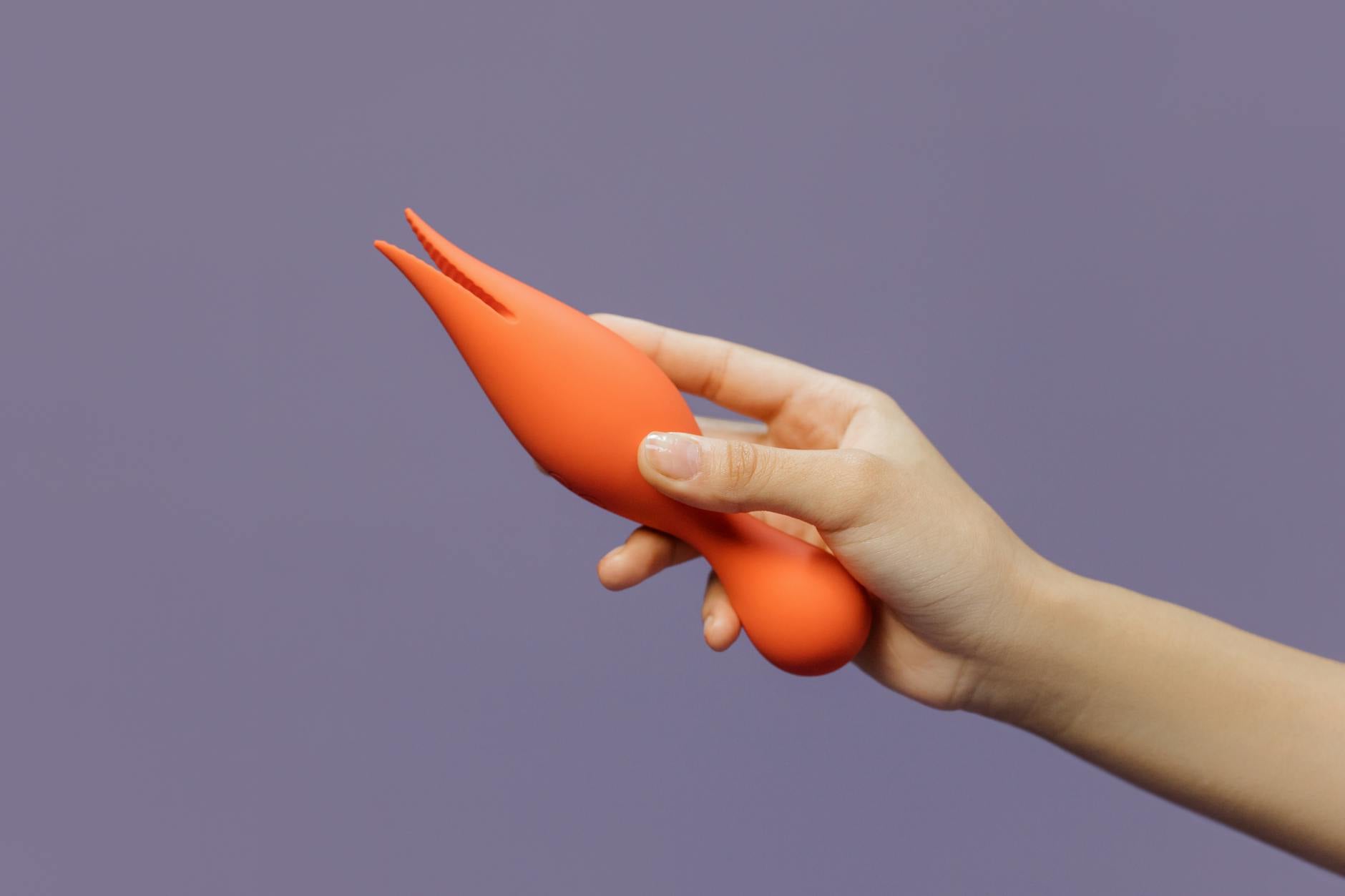
When sensation is turned down, you need something with reliable intensity and precision. A lemon vibrator delivers both. The suction mechanism works differently than a traditional vibrator. Instead of relying on friction or broad stimulation, it creates a gentle seal and pulses in a pattern that's consistent and measurable.
For a body that's been shutdown, this is crucial. You're not relying on your own physical response to tell you something is working. The device itself is the proof. It's generating sensation whether your nervous system is ready or not. That removes the performance pressure. You can't fail at using a lemon vibrator. You can only learn what feels good.
The other reason: lemon vibrators give you a massive range of intensity. You're starting at level one, which is honestly quite gentle. You're not forcing your body to wake up. You're inviting it. This matters when you're working with a nervous system that's learned to protect itself through numbness.
Start solo. Not because partnered sex is wrong, but because you need to rebuild the connection with your own body first. Your partner can watch if that feels good to you. But the focus is entirely on you and sensation.
Set a time when you have at least 20 minutes with no interruptions. Not just no physical interruptions. Silence. Your phone off. No one else in the house. Your nervous system is still in protection mode. It needs to know it's actually safe before it can drop that guard.
Start with your clothes on. I'm not exaggerating. If you're grieving, the vulnerability of nudity can feel overwhelming. So don't demand it. Wear whatever feels comfortable. Underwear is fine. Jeans are fine. You're building capacity here.
Touch your body first. Not genitally. Anywhere. Your arms, your neck, your hands. Feel yourself. For grief-numbed bodies, even basic physical sensation can feel strange or distant. You're recalibrating the feedback loop between touch and sensation. Give yourself five minutes of this. Slow. No agenda.
Now, with your clothes still on, apply the lemon vibrator to the area over your underwear or clothing. Start at level one. The lowest setting. Leave it there for 30 seconds. This is not about pleasure yet. This is about proof of concept. Your body is receiving stimulus. It's creating sensation even if you can't feel it clearly yet.
Move it around slightly. Up, down, side to side. Small movements. You're mapping where you still have sensitivity, however faint.
If this feels okay, move to level two. Stay there for a minute. Notice what changes.
If numbness persists, don't panic. That's actually normal. Grief-numb bodies sometimes need multiple sessions before sensation starts returning. This is session one. You're teaching your nervous system that pleasure is available. That information doesn't get downloaded in 20 minutes.
Once you can comfortably use the lemon vibrator over clothing without feeling like your body is betraying you or that the experience is wrong, try the next step. Remove your underwear but keep the rest of your clothes on if that helps. Now use the vibrator directly on your clitoris.
Stay at level one for the first three sessions. I know you want to jump to higher intensity. Resist that. Your nervous system is still learning that it's safe to feel pleasure. Intensity is a conversation for later.
During this phase, notice what happens psychologically. Grief often pairs pleasure with guilt. As you feel something starting to return, you might get hit with a wave of that guilt. "How can I feel this when they're gone?" That's your brain, not the truth. Let the thought exist. Don't argue with it. And don't stop the vibrator. Keep going. You're teaching your nervous system that pleasure and grief can coexist. They can.
Some sessions will feel good. Some will feel like nothing. Both are fine. You're rebuilding a connection, not achieving anything.
When your body starts to wake up after grief numbs it, emotions can flood in. You might cry. You might laugh. You might feel anger, relief, or inexplicable sadness. This is your nervous system processing.
This is also why I recommend having a conversation with your partner beforehand. Not a sexy conversation. A real one. "When I start reconnecting with pleasure, I might get emotional. That doesn't mean stop. It means keep going. I need to move through this."
You might need to pause. That's okay too. You're in charge. The lemon vibrator is a tool. You decide how it's used.
Once you can use a lemon vibrator alone without the experience feeling unsafe, you can invite your partner to watch. Not to participate yet. Just to be present. This builds intimacy without the pressure of mutual pleasure.
From there, you can move toward partnered touch while using the vibrator. Your partner touches you while you use the device. This bridges the gap between solo and partnered sex without forcing you into full penetration or direct partner contact before you're ready.
The timeline for all of this varies wildly. Some people move through these steps in three weeks. Some take three months. What matters is that you're moving toward connection, not forcing it.
It depends on the nature of the loss and your nervous system's baseline. For some people, sexual numbness starts lifting within a few weeks of the acute grief phase ending. For others, it takes months. The general timeline in my practice: if you're still completely numb six months after the loss, it's worth talking to a therapist. Not because it's abnormal, but because professional support can help your nervous system move through this faster.
Absolutely. Grief and pleasure exist in the same body. The fact that you're still grieving doesn't disqualify you from reconnecting with sensation. In fact, pleasure might be part of your healing. It reminds you that you're alive. That you can still feel. That your body deserves care.
This is complex and deeply personal. If you believe the person you lost would want you to eventually feel pleasure and joy again, that's worth holding onto. Grief that outlasts pleasure can become its own kind of trap. You're not betraying anyone by reclaiming your sexuality. You're reclaiming yourself.
Not necessarily. Many people find that rediscovering solo pleasure first makes partnered reconnection easier. You're not performing. You're just meeting yourself where you are. Once you know what feels good to you again, sharing that with a partner becomes possible. If you're single and grieving, solo pleasure is absolutely enough. It's the reconnection that matters, not who it's with.
That might signal that your nervous system needs professional support. A grief counselor or trauma-informed therapist can help you process what's stuck. There's no shame in that. Grief is an injury to your nervous system. Some injuries heal faster with professional care.
Some antidepressants (particularly SSRIs) can dull sensation as a side effect. If you're on medication and finding that sensation is particularly muted, talk to your prescriber about it. There are often alternatives. That said, the gentleness of a lemon clitoral vibrator can help even on medication. The precision and suction mechanism sometimes create sensation that other tools don't.
Your body didn't shut down pleasure because you did something wrong. It shut down because it was protecting you. The way back isn't through force or pressure. It's through consistent, gentle invitation.
A lemon vibrator is that invitation. It's a tool that says, "Your pleasure matters. Your sensation matters. Your body deserves to feel alive again."
Start small. Stay patient. Notice what changes. The numbness of grief eventually thaws. Sometimes faster than you expect. Sometimes slower. But it does move. Your nervous system is waiting for permission to reopen. Give it that.