Let's name what's actually happening
Your partner wants you. You want to want them back. But the second things start to build, your brain gets loud. Your chest tightens. Your mind spins through your to-do list, or your work emails, or something they said three days ago that suddenly feels urgent. Your body disconnects. This isn't broken. This is what anxiety does.
In long-term relationships, this pattern becomes its own trap. After months or years of this cycle, you start avoiding sex entirely because you've learned your body won't cooperate anyway. Your partner feels rejected. You feel guilty for feeling nothing. Both of you end up convinced something is wrong with the relationship when what's actually wrong is that your nervous system is in survival mode.
Why anxiety kills arousal faster than anything else
Here's the neurological reality: arousal and anxiety cannot coexist in the same nervous system at the same time. This isn't poetic. It's literally how your brain is wired.
When you're anxious, your amygdala (your brain's alarm system) is running the show. Your body is flooded with cortisol and adrenaline. Blood moves away from your genitals and toward your muscles, because your system thinks you need to fight, flee, or freeze. Meanwhile, the prefrontal cortex (the part that handles pleasure, connection, and relaxation) goes offline. You're trying to have sex while your brain is convinced you're in danger.
Add a long-term relationship to this equation and things get worse. After years together, sex starts to feel like an obligation. You've built a story around your body's refusal to cooperate. You're anxious about being anxious. And because your partner knows you're anxious, they might be anxious too, which means their nervous system is also dysregulated. Two anxious people trying to have sex is like trying to sync two alarm clocks.
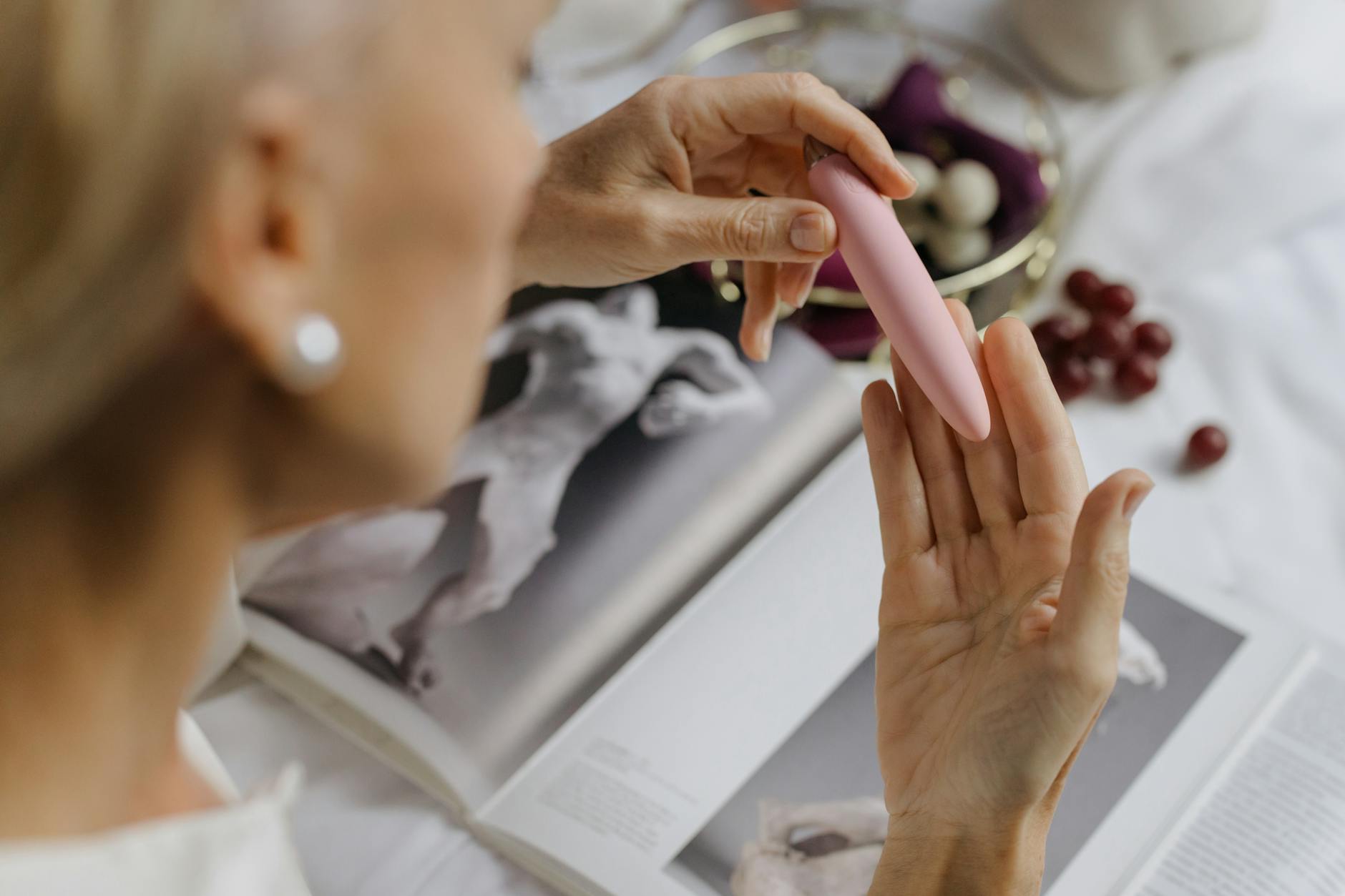
Why a vibrator (specifically, a lemon clitoral vibrator) actually changes this
Here's what makes a clitoral vibrator different from partnered sex when anxiety is running high.
First, it removes the performance pressure. You're not trying to meet someone else's timing or rhythm. You're not watching their face to see if they're disappointed. A vibrator like the Lem works on your timeline, at your intensity, with zero judgment.
Second, the stimulation bypasses anxiety in a specific way. Sustained, consistent stimulation from a quality clitoral vibrator activates your parasympathetic nervous system (the brake pedal) while simultaneously building arousal. The vibration gives your brain something concrete to focus on instead of your racing thoughts. It's not distraction exactly. It's more like a nervous system redirect.
Third, reconnecting with solo pleasure actually rewires your ability to feel pleasure with a partner. When you practice feeling arousal on your own terms, your body learns that pleasure is possible again. That sensation travels into partnered sex.
How to actually use this when anxiety is present
Step one: Pick a time when you're alone. This sounds obvious, but it's critical. The goal here is not to prove anything to your partner or to "fix" your relationship sex. The goal is to prove to your body that pleasure is still accessible to you. That only happens when there's zero pressure or audience.
Step two: Start with breathing, not stimulation. Spend five minutes (yes, five full minutes) doing box breathing. In for four, hold for four, out for four, hold for four. This actually shifts your nervous system toward parasympathetic activation before you even touch the vibrator. Your brain will still want to wander. That's anxiety doing its job. You're not fighting it. You're just gently returning to your breath when it does.
Step three: Use the vibrator at low intensity first. Most people make the mistake of going straight to high intensity because they're used to having to "chase" orgasm. With anxiety present, this backfires. Start at setting one or two and spend time here. The goal is not orgasm right now. The goal is sensation. Feel the vibration. Notice what your body does when there's no pressure to climax.
Step four: Let pleasure expand at its own pace. If orgasm happens, great. If it doesn't, that's also fine. You're training your nervous system that pleasure doesn't have to end in orgasm to be valuable. This is actually one of the most powerful things you can do for anxiety-blocked arousal, because you're removing the finish line that your anxious brain uses as another measurement of "success or failure."
Step five: Notice what changed. After a session, spend two minutes just noticing. Your heart rate. Your breath. Whether your thoughts are still racing or if they've quieted. This builds what therapists call "interoceptive awareness"—your ability to feel what's happening in your body. Anxiety thrives in disconnection from sensation. You're rebuilding that connection.
Bringing this back to partnered sex
The goal of solo practice with a lemon clitoral vibrator is not to create an alternative to partnered sex. It's to rebuild your nervous system's capacity for pleasure so that partnered sex becomes possible again.
Once you've spent a few weeks reconnecting with your own arousal, start having conversations with your partner. Not about what you're "doing wrong," but about what your nervous system actually needs. Some people find that starting partnered sessions with the vibrator (using it together) helps bridge the gap. Others find that having vibrator sessions solo, and then prioritizing non-sexual touch with their partner for a while, resets the whole dynamic.
The critical thing is this: your partner needs to understand that using a lemon vibrator is not about them being insufficient. It's about your nervous system needing a way back home to pleasure. When they understand this, the whole conversation changes. They're not competing with a toy. They're supporting their partner's nervous system recovery.
When anxiety needs more support
If you're using a vibrator regularly but anxiety is still making arousal impossible, or if anxiety is affecting multiple areas of your life, talk to a therapist. Specifically, look for someone trained in somatic therapy, EMDR, or the Gottman Method for couples work. Anxiety-blocked arousal is often a signal that something deeper in your nervous system or your relationship needs attention. A vibrator is a tool for reconnection. It's not a replacement for addressing the root cause.
FAQ: Anxiety, arousal, and vibrators
Can using a vibrator make my anxiety worse?
Not if you're doing it right. If you're using the vibrator as another way to "perform" or to "fix" yourself, then yes, that pressure can amplify anxiety. The shift happens when you reframe it as nervous system recovery, not performance. No goal. No finish line. Just sensation.
How long does it take before I can have partnered sex again without anxiety spiking?
There's no timeline. Some people notice a shift in two to three weeks. Others take two to three months. The more you practice solo pleasure without pressure, the faster your nervous system recalibrates. But speed isn't the goal. Consistency is. Even ten minutes twice a week changes your nervous system more than an intense pressure-filled session once a month.
Should I tell my partner I'm using a vibrator for anxiety relief?
If you're in a committed, communicative relationship, yes. Not as a confession, but as information. Something like, "My nervous system has been stuck in anxiety mode during sex, so I'm going to practice reconnecting with my body on my own for a bit. This isn't about you. It's about helping my body remember pleasure." Most partners actually feel relieved when they understand this.
Can my partner use the vibrator on me to help with anxiety?
Only after you've had solo success first. Once you've proven to your body that pleasure is possible, yes, a partner can learn your rhythm and use a clitoral vibrator like the Lem as part of partnered sex. But introducing it too early, while anxiety is still high, can feel like more pressure. Solo practice first. Partner use after.
What if the vibrator doesn't help at all?
Then anxiety might be too high right now, and you need support in lowering your nervous system's baseline activation first. Talk to a therapist, a doctor, or both. Medication, therapy, or both might be the right next step. A vibrator is not a treatment for clinical anxiety. It's a tool for reconnecting with pleasure once your system is stable enough to feel it.
Is it normal for anxiety to spike during orgasm?
Yes. Some people have orgasm-induced anxiety (also called postorgasm dysphoria). If you're experiencing this, go slower with the vibrator, stay in lower intensity settings, and consider whether something in your life (relationship stress, work stress, past trauma) is making your nervous system more reactive. This is also worth discussing with a therapist.
You deserve arousal that feels possible
Anxiety in a long-term relationship doesn't mean your relationship is ending. It means your nervous system needs reset. A clitoral vibrator gives you a safe, solo way to teach your body that pleasure is still accessible. Start there. Let everything else follow. Your partner will be waiting when you're ready.
If you'd like to explore other approaches to rebuilding intimacy, check out how to use a lemon vibrator when rebuilding intimacy after major life stress or how to use a lemon vibrator when you want deeper connection with your partner. Both cover complementary strategies for reconnecting when your relationship feels stuck.
For personalized guidance on managing relationship anxiety, contact My Lem Shop to book a session with a relationship specialist.